


Table of Contents
- Easy Blanket Fort Ideas for Every Space
- How to Make a Blanket Fort Step by Step
- Blanket Fort with Chairs: Sturdy Structures That Last
- Blanket Fort Safety Tips and Best Practices
- Adding Comfort: Pillows, Cushions, and Soft Lighting
- Multi-Room Forts and Advanced Designs
- Small-Space Solutions and No-Furniture Forts
- Themed Forts for Imaginative Play
- Frequently Asked Questions
Last Updated: October 21, 2026
Easy Blanket Fort Ideas for Every Space
Building an indoor fort doesn't require special equipment or complicated plans. A few blankets, some furniture, and a little creativity transform any room into a magical hideaway, and there are creative ways to use blankets for indoor forts that work for every space.
At BlanketPalsTM, we've seen that the simplest forts often bring the most joy. Whether you have a tiny apartment or a sprawling living room, there's a creative way to use blankets for indoor forts that works for your home. And adding a BlanketPalsTM playscapes inside the fort is among the very best ways for exhilarating play.
The Classic Couch Fort
The couch fort is the easiest place to start. Drape a blanket over the back of your sofa and anchor the front edge under the cushions for an instant cave-like space.
For a sturdier setup, use two blankets: one across the back and down the front, a second on one side for extra coverage.
Add pillows inside and you've created the perfect reading nook.
Chair-and-Blanket Frame
Dining chairs make excellent fort frames because they're lightweight and easy to arrange. Push two chairs together, drape a blanket over the tops, and secure it with clothespins or clips.
This setup stays stable through longer play sessions, and the open sides let in light and air.
Add a third or fourth chair for a larger fort with more coverage and room for multiple children.
Card Table Cave
A card table provides the perfect roof structure. Drape blankets over it and let them hang to the floor on all sides for a complete enclosed space that feels like a real cave or cabin.
Card tables are lightweight and portable, and the flat surface distributes blanket weight evenly.
Layer blankets of different colors or textures for visual interest.
How to Make a Blanket Fort Step by Step
Follow these simple steps for a functional fort in minutes.
What You'll Need
Before you start, gather these basic supplies:
- Two to four blankets (different sizes work fine)
- Furniture pieces like chairs, a couch, or a card table
- Clothespins, clips, or binder clips to secure blankets
- Pillows and cushions for comfort
- Optional: fairy lights or a small lamp for soft lighting
Size matters more than type: larger blankets give more coverage and flexibility. BlanketPalsTM blankets, with their soft polyester fleece front and water-resistant backing, drape beautifully.
Building Your Fort: The Process
Step 1: Choose Your Base Structure
Select your furniture anchor point, a couch, card table, or group of chairs. Make sure it's stable and won't tip when you add blanket weight.
Step 2: Position Your Blankets
Drape your first blanket over the top and let it hang naturally on both sides. For a couch, tuck one edge under the cushions to anchor it.
Step 3: Secure the Blanket
Use clothespins or clips where the blanket meets the furniture to prevent slipping during active play. Binder clips work surprisingly well if you don't have clothespins.
Step 4: Add a Second Blanket
For more coverage or a larger interior, add a second blanket, overlap it with the first, and secure it the same way.
Step 5: Create Openings
Leave at least one opening large enough for kids to crawl through comfortably. Too many openings weaken the structure, but one is essential for safety.
Step 6: Add Interior Comfort
Place pillows and cushions inside, they serve as seating and support the blanket structure from below.
Step |
Purpose |
Time |
|---|---|---|
Choose base structure |
Create stable frame |
1 minute |
Position blankets |
Establish roof and walls |
2 minutes |
Secure with clips |
Prevent shifting |
2 minutes |
Add second blanket |
Increase coverage |
2 minutes |
Create openings |
Allow safe entry/exit |
1 minute |
Add interior comfort |
Improve usability |
2 minutes |
Blanket Fort with Chairs: Sturdy Structures That Last
Chair-based forts are more durable than couch forts and handle active play better.
Creating a Roof and Walls
Position chairs in a rectangle or square, roughly three to four feet apart so blankets stretch between them without sagging.
Drape your first blanket across the chair tops as the roof, large enough to hang several inches on each side. Let it drape naturally rather than pulling it tight.
For walls, drape additional blankets from the roof down to the floor on all sides, leaving one side slightly open for entry or exit.
A chair fort feels larger than a couch fort because you can arrange chairs for more headroom.
Securing Blankets Without Damage
Clothespins are the safest way to secure blankets to furniture, they grip fabric without permanent marks or holes. Binder clips work similarly well and often come in fun colors.
Avoid staples, tape, or nails, they damage blankets and furniture and create safety hazards.
For blankets draped over chair backs, gravity usually holds them in place. Test the stability before letting kids inside. Gently push on the roof section to make sure it doesn't shift or collapse. If it moves, add clips or clothespins to key points.
When removing blankets, take clips off slowly and check both the blanket and furniture for snagging.
Blanket Fort Safety Tips and Best Practices
A few simple precautions keep fort time fun and worry-free.
Picnic BlanketPal™ - with Shark at Coral Bay (2 Family Sizes, $54.95 - $69.95) →
Never build a fort on stairs or near edges where kids could fall. The enclosed environment can make it hard for them to see hazards.
Make sure the structure is stable before kids enter. Test it yourself by applying gentle pressure to the roof and walls; if anything shifts, reinforce it with clips or adjust the furniture.
Check inside the fort before kids play and remove any sharp objects or hazards.
Keep the fort entrance clear so kids can exit quickly. One clear opening works best, it's easier to check on kids and for them to get out in an emergency.
Never leave young children unsupervised inside a fort. Periodic check-ins help kids feel secure and let you monitor their safety.
Adding Comfort: Pillows, Cushions, and Soft Lighting
Comfort elements transform a fort from a simple structure into a real retreat kids want to stay in.
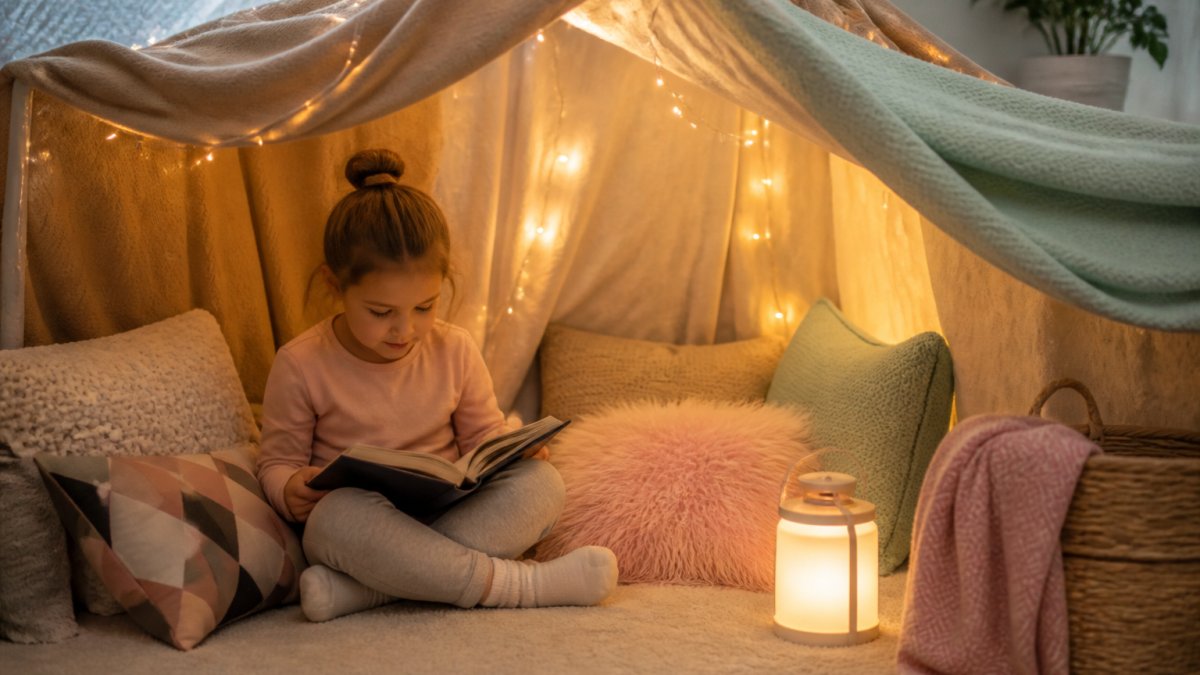
Pillows create the foundation of fort comfort. Layer different sizes and shapes on the floor for a soft surface to sit and lie on.
Cushions add texture and visual interest. Stack them for different seating levels or lean them against the blanket walls for back support.
Soft lighting transforms the fort's atmosphere. Battery-powered fairy lights strung across the ceiling create a magical glow without needing outlets, and a small battery-powered lamp adds ambient light.
Avoid harsh overhead lighting, soft, warm light makes kids feel cozy and encourages longer play.
Consider adding a small blanket or throw inside the fort as an extra layer. This gives kids something soft to wrap up in and adds to the cave-like feeling.
Multi-Room Forts and Advanced Designs
Once your family masters basic forts and the creative ways to use blankets for indoor forts, expand into more complex designs.
Start with a main room using your couch or card table as the base. Then create connecting rooms using chairs or additional furniture pieces.
Each room can serve a different purpose. One might be a reading room with books and pillows. Another could be a play kitchen using a small table.
This approach works especially well when multiple children are playing together. Each child can claim a room or take turns using different spaces. The interconnected design keeps everyone engaged.
Advanced designs use multiple levels.
The key to successful multi-room forts is planning. Sketch a simple layout before you start building. This helps you use furniture efficiently and creates better flow between spaces.
Small-Space Solutions and No-Furniture Forts
Not every home has lots of furniture or space for elaborate forts. Small apartments and tight spaces require different approaches.
A blanket draped over a single chair creates a functional fort in minimal space. This works in bedrooms, small living rooms, or even corners of larger rooms.
Doorway forts use existing architectural features. Drape a blanket across a doorway frame and secure it with tension rods or removable adhesive hooks.
Wall-mounted solutions work well in small spaces. Use removable adhesive hooks to hang blankets from walls, creating a tent-like structure. This approach keeps furniture clear and maximizes usable floor space.
A corner fort uses two walls as the frame. Drape blankets from corner to corner and secure them with clips.
For families without extra furniture, stack pillows and cushions to create a frame. Drape blankets over the pile to create walls and a roof.
Themed Forts for Imaginative Play
Transform basic forts into themed spaces that spark specific types of imaginative play.
A camping fort uses earth-tone blankets and natural elements. Add stuffed animals as camping companions. Use a flashlight as a campfire.
A pirate fort becomes a ship cabin or treasure cave. Use darker blankets to create an adventure atmosphere.
A space fort uses silver and blue blankets to create a spacecraft. Add glow-in-the-dark elements or battery-powered lights to simulate stars.
A fairy tale fort uses colorful blankets and decorative elements. Add flowers, ribbons, or fabric scraps for decoration.
A library fort becomes a quiet reading retreat. Stock it with books, comfortable pillows, and soft lighting.
BlanketPalsTM blankets with their themed designs make this even easier. A racetrack blanket becomes a racing fort.

Themed forts encourage longer play sessions because kids have a clear narrative to follow.
Building blanket forts is one of the simplest and most rewarding activities families can do together. With the right blankets, a few safety precautions, and some comfort elements, you can create forts that become family favorites. Research on imaginative play shows that fort building and pretend play are crucial for child development.
Frequently Asked Questions
What's the best way to secure a blanket fort without damaging furniture?
Clothespins, binder clips, and painter's tape are your safest options. Clothespins grip blanket edges firmly without leaving marks. Painter's tape won't damage wood or fabric surfaces. Avoid pinning into upholstery directly. If using a card table, drape blankets over the frame so gravity holds them in place. For couches, tuck blankets into cushions and between seat cushions rather than tying them down. Always test your securing method on a small area first to ensure no damage occurs.
How do you make a blanket fort cozy and safe for kids?
Start with a sturdy frame using chairs, couches, or card tables that won't tip easily. Layer soft blankets and sheets to create a cave-like space that feels secure. Add pillows and cushions for comfort and to cushion any hard edges. Use soft lighting like fairy lights rather than harsh overhead lights to create a warm atmosphere. Ensure the fort has adequate ventilation by leaving small gaps or openings. Remove any sharp objects or hazards from inside. Test the structure's stability before letting kids enter. Never use heavy blankets that could restrict movement or cause overheating.
Can you sleep in a blanket fort?
Yes, blanket forts can be comfortable sleeping spaces for short periods or naps. Ensure the structure is stable and won't collapse during the night. Use soft, breathable blankets rather than heavy ones that might cause overheating. Add extra pillows and cushions for support and comfort. Keep the fort well-ventilated to prevent stuffiness. For young children, supervise sleep in forts and keep them away from hazards. Blanket forts work well for special family nights, camping-style indoor adventures, or when kids want a cozy escape for quiet time.
What household items can you use to build a blanket fort?
Common household items perfect for fort building include chairs, couches, ottomans, card tables, and side tables as structural frames. Blankets, sheets, and comforters serve as roof and wall coverings. Pillows and cushions add interior comfort and help cushion joints. Clothespins, binder clips, and painter's tape secure blankets without damage. Fairy lights or string lights create soft lighting inside. Books can act as weights to hold blankets in place. Stuffed animals and cushions fill the interior space. The key is using what you have at home to create a stable, safe structure that sparks imaginative play.