


Last Updated: November 5, 2026
Quick Summary
To learn how to pack light for family trips, write a list based on trip length, number of people, and planned activities, then include only what each person will use. Plan one outfit per day for short trips and about 4-5 outfits per person for a week, relying on laundry and re-wearing for longer stays.
- Short trips (2-3 days) need one outfit per day plus one spare set per child.
- A week-long trip needs about 4-5 outfits per person, with one laundry session mid-trip.
- Limit shoes to two or three pairs per person and wear the bulkiest pair on the plane.
- Pack two days of diapers for a baby and buy the rest at your destination.
- Pack a small stain and spill kit instead of extra outfits to handle accidents.
Table of Contents
- Why Families Overpack and What Light Packing Actually Means
- Step 1: Plan Your Packing List Before You Touch a Suitcase
- Step 2: Choose a Carry-On or One-Bag Approach
- Step 3: Pack Clothes That Mix, Match and Re-Wear
- Step 4: Pack Children Differently by Age
- How to Pack Light for 7 Days and Beyond
- Keeping Kids Entertained With Fewer Things to Carry
- Book Your Next Trip With a Lighter Bag and Start Your Packing List Tonight
- Frequently Asked Questions
Why Families Overpack and What Light Packing Actually Means
Packing light for family trips means bringing only what each person will really use.
A simple plan cuts bulk without leaving anything important behind, making airports easier, car rides calmer, and hotel rooms less cluttered.
Light packing does not mean bringing nothing. It means choosing versatile items, planning for real conditions, and keeping entertainment and comfort items compact.
Common reasons families overpack:
- Packing for every possible weather condition
- Bringing one outfit per day plus backups
- Carrying full-size toys "in case" kids get bored
Step 1: Plan Your Packing List Before You Touch a Suitcase
A written list keeps you honest. Knowing how to pack light for family trips starts here: note your trip length, the number of people, and your planned activities, then list only what each person needs for those activities.
Use a packing formula based on trip length
A simple formula keeps the list short: base clothing sets per person on trip length, and use laundry on longer trips.
- Short break (2-3 days): 1 outfit per day, plus 1 spare set per child
- Week-long trip (7 days): 4-5 outfits per person, plus laundry or re-wearing
- Longer trip (10+ days): Plan one laundry stop, then pack for about one week
Adjust these numbers for messy kids, rainy weather, or easy access to laundry.
Plan outfits in advance and check the weather
Pick outfits for each day before you pack.
Check the forecast a few days before departure.
Watch out: Packing "just in case" outfits for every possible event is the fastest way to exceed your bag limit.
The article's packing formula gives a quick reference for how many outfits to bring based on trip length.
| Trip length | Outfits per person | Laundry plan |
|---|---|---|
| Short break (2-3 days) | 1 per day, plus 1 spare set per child | Not needed |
| Week-long (7 days) | 4-5 | Re-wear or do laundry |
| Longer (10+ days) | Pack for about one week | One laundry stop |
Step 2: Choose a Carry-On or One-Bag Approach
A carry-on or single large bag forces smart choices, saves time at check-in and baggage claim, and lowers the risk of lost luggage.
A weekender bag works well as a carry-on option for a family member's clothes and small essentials. You can see the Weekender Bag from BlanketPals for a compact, one-bag option that fits short trips.

Airline carry-on limits and what counts toward them
Carry-on size and weight limits vary by airline, so check your carrier's rules before you pack. Some airlines count a personal item, such as a diaper bag or backpack, separately from a carry-on bag.
Families often bring extra items on board, such as car seats, strollers, and snacks. Keep the carry-on for clothes and essentials, and check the stroller at the gate where possible.
Step 3: Pack Clothes That Mix, Match and Re-Wear
Clothes that work together are the core of light packing. Choose a small color palette, such as navy, gray, and white, so every top works with every bottom.
Building a capsule wardrobe for the whole family
Start with neutral bottoms and tops that can layer, add one or two accent pieces for variety, and keep the number of items low and the combinations high.
- Pack 2-3 bottoms per person (jeans, shorts, leggings)
- Pack 4-5 tops per person that match all bottoms
- Add one warm layer, such as a sweater or fleece
Choose quick-dry fabrics where possible. They wash easily and dry overnight, which supports re-wearing.
Layering for changing weather and limiting shoes
Layers adapt to temperature changes better than heavy coats. A base shirt, a mid-layer, and a light rain jacket cover most conditions.
For shoes, pack no more than two or three pairs per person: one walking pair, one casual or sandal pair, and one dressier option if needed. Wear the bulkiest pair on the plane.
Step 4: Pack Children Differently by Age
Children have different needs at each stage, so one packing approach rarely fits all. Pack the right things for their age to avoid both overpacking and mid-trip emergencies.
Babies and toddlers (0-3 years)
Babies generate laundry faster than any other family member, so plan for more clothing changes rather than fewer.
- Clothing: 2 outfits per day for babies, 1-2 per day for toddlers, plus 2 spare sleepers or pajamas
- Diapers and wipes: Pack enough for the travel day plus one full day, then buy locally at your destination to save space
- Feeding: Bring only the bottles, sippy cups, and utensils your child actually uses; a small bottle of dish soap helps with hand-washing
Watch out: Packing a full week of diapers for a baby can consume an entire suitcase. Most families pack two days' worth and buy the rest at a pharmacy or supermarket near their accommodation.
Preschoolers (3-5 years)
Preschoolers are messy but predictable. They need fewer outfit changes than babies but more than school-age children because of spills, accidents, and sensory preferences.
- Clothing: 1 outfit per day plus 2 spare sets, with at least one easy-on-easy-off outfit for travel days
- Comfort and routine: A small blanket, a favorite cup, and one or two familiar books help with sleep and transitions
- Entertainment: A small pouch with stickers, crayons, and a notebook; avoid bringing multiple large toys
A useful rule is to let preschoolers choose one small bag of toys or books themselves, then you approve the final selection.
School-age children (6-12 years)
School-age children can take real responsibility for their own packing, which reduces your mental load and teaches them to travel light.
- Clothing: 4-5 outfits for a week, built around a small color palette so everything mixes
- Packing method: Give each child a packing cube or a small duffel and a written checklist; review it together before zipping
- Entertainment: One book, one small game or deck of cards, and headphones for shared devices
Let them pack their own bag under your guidance, then do a quick check for duplicates and missing essentials.
Teens (13+ years)
Teens have strong opinions about clothing and routines, so the most effective approach is a clear limit rather than a detailed list.
- Bag limit: One carry-on-sized bag or one duffel per teen, plus a personal item
- Clothing: Let them choose their own capsule within a set number of items, such as 5 tops, 3 bottoms, 1 warm layer, and 2 pairs of shoes
- Toiletries: A small toiletry bag with their own products, kept within airline liquid limits if flying carry-on only
Teens commonly overpack shoes and toiletries. Setting a shoe limit of two pairs and a single small toiletry bag solves most of the problem before it starts.
Essential child items to prioritize for every age
Some items should never be minimized, even on a light-packing trip. Keep these in the carry-on or a dedicated family essentials pouch:
- Medications and any prescribed items, with copies of prescriptions
- Comfort objects, such as a favorite blanket or stuffed animal
- A few quiet activities for downtime
The trade-off is simple: pack fewer toys and fewer outfit options, but never cut medication, comfort items, or a basic first-aid kit.
How to Pack Light for 7 Days and Beyond
A week-long trip is where light packing pays off most. Plan for laundry and re-wearing from the start rather than packing a full week of outfits.
A realistic quantity plan by trip length
Use these starting quantities per person, then adjust for messy children, climate, and access to laundry.
- Weekend (2-3 days): 1 outfit per day, plus 1 spare set per child; 1 pair of pajamas; 1 pair of shoes worn, 1 packed
- One week (7 days): 4-5 outfits per person; 2 pairs of pajamas; 2-3 pairs of shoes; plan one laundry session mid-trip
- Two weeks (14 days): 5-6 outfits per person; 2 pairs of pajamas; 2-3 pairs of shoes; plan two laundry sessions
These are starting points, not rules. A family with a toddler may need more spare outfits; a family traveling to a warm, dry climate may need fewer layers and can hand-wash quick-dry items overnight.
Laundry and re-wearing strategies for longer trips
Re-wearing is normal on trips. Pants, jackets, and many tops can be worn two or three times between washes. Underwear and socks are the main items to wash each day.
Plan laundry around your accommodation and itinerary:
- Check your accommodation: Before you pack, confirm whether your hotel, rental, or family stay has a washing machine, a laundromat nearby, or a sink suitable for hand-washing
- Schedule a laundry day: On a week-long trip, plan one laundry session around the middle of the trip, ideally on a rest day or an evening when you are not going out
- Pack for hand-washing: A small bottle of travel detergent, a sink stopper, and a foldable laundry bag take up little space and make hand-washing simple
A common pattern is to wash underwear and socks every evening in the sink, then do one machine load of shirts and pants mid-trip.
How to handle spills and accidents without overpacking
Spills and accidents are the main reason families pack extra outfits. Instead of packing more clothes, pack a small stain and spill kit:
- A stain remover pen or small bottle of stain remover
- A few disposable or reusable wet bags for soiled clothes
- One spare outfit per child in the carry-on, not the checked bag
For babies and toddlers, a wet bag for soiled clothes keeps the rest of the luggage clean and lets you deal with laundry at the next stop rather than immediately.
When to pack more instead of less
Light packing is not a contest. Some trips justify more clothing than the formula suggests:
- No laundry access: If your accommodation has no washing machine and no nearby laundromat, add 2-3 outfits per person for a week-long trip
- Formal or work events: Pack the formal outfit separately and do not try to minimize it; one good outfit is worth the space
- Cold or wet climates: Layers and rain gear take more space, so reduce the number of outfits and rely on re-wearing outer layers
Watch out: Packing new clothes for every day "to be safe" is the most common overpacking mistake. Most families find they wear the same few favorites on repeat, so the extra items stay unworn. Pack for the trip you are actually taking, not for every scenario you can imagine.
Keeping Kids Entertained With Fewer Things to Carry
Entertainment takes up a lot of space in family bags. The trick is to choose items that do more than one job.
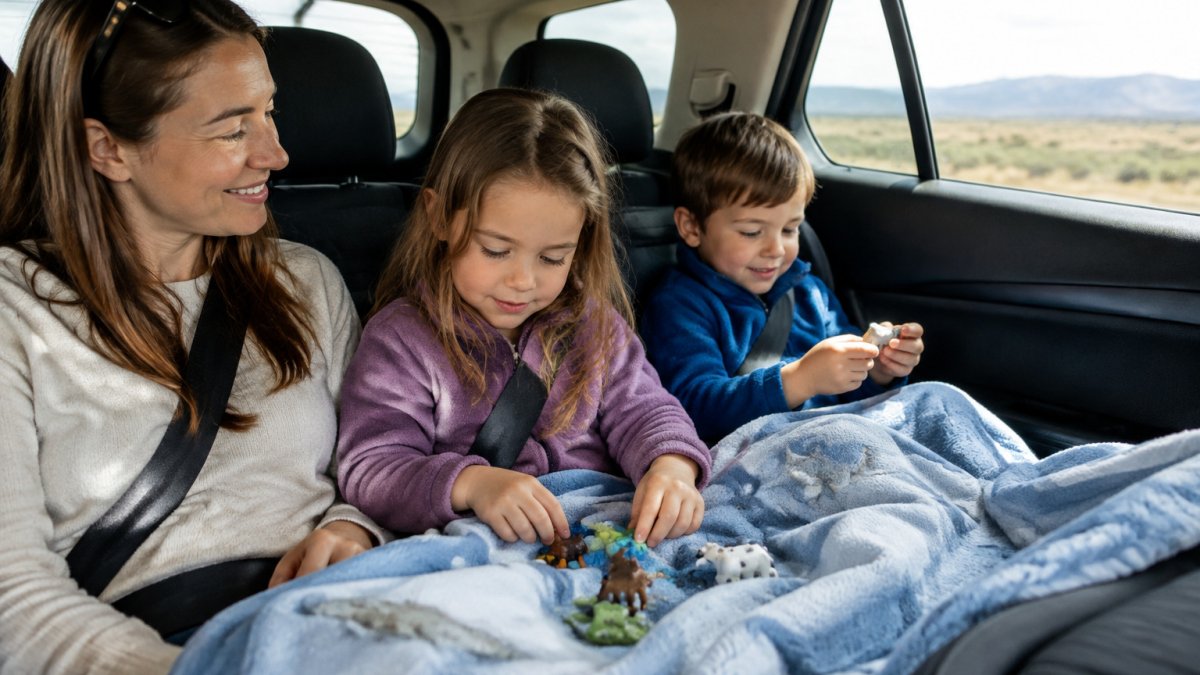
A soft, folding blanket can serve as a play area or a cozy spot to nap.
!Parent and two young children in a car on a long road trip, a child playing on a folded soft blanket across the back seat
For longer car rides, a Toddler car-ride entertainment guide offers practical ideas that need almost no packing space. Many families also find that screen-free car travel activities keep kids busy with paper, crayons, and simple games.
Low-bulk entertainment ideas:
- A single folding blanket with small toys
- A notebook and crayons
- Sticker books and magnetic games
Book Your Next Trip With a Lighter Bag and Start Your Packing List Tonight
Lighter packing starts with a single list. Write down your trip length, your people, and your main activities, then cut anything that does not match.
Bring one versatile bag, a capsule wardrobe, and a few favorite comfort items for each child. You will spend less time searching through bags and more time enjoying the destination.
Frequently Asked Questions
What is the 5-4-3-2-1 rule for packing?
The 5-4-3-2-1 rule is a simple shortcut for packing a bag quickly: five tops, four bottoms, three pairs of shoes, two dresses or outfits for dressier moments, and one jacket or layer. It works best for a trip of about a week. For families, multiply the count by person and adjust for children who need extra changes. Pair it with a packing list so you can check each category before you zip the suitcase.
How do you pack light for a 10-day family trip?
For a 10-day trip, plan around laundry rather than packing one outfit per day. Bring enough clothes for about five to six days and wash mid-trip, using a sink or a laundromat. Choose mix-and-match pieces in neutral colors, limit shoes to two or three pairs, and use packing cubes to keep each person's items separate. Kids usually need more changes than adults, so pack an extra set of clothes per child for messy days.
How can a family pack for a trip using carry-on bags only?
Start by checking your airline's carry-on size and weight limits, since they vary by carrier and sometimes by fare class. Use one bag per person, with a small backpack for essentials and snacks. Roll clothes, use compression cubes, and wear your bulkiest items such as jackets and sturdy shoes on the plane. Keep medications, a change of clothes for each child, and essential comfort items in the carry-on in case checked luggage is delayed.
What are the most commonly forgotten items when packing for a family vacation?
Families often forget chargers and adapters, prescription medications, sunscreen and bug spray, and a spare set of clothes for each child. Comfort items such as a favorite blanket or small toy are also easy to overlook until a child is upset on the first night. Keep a running list on your phone during the week before you leave and check it against the bag the night before departure.
Start your list tonight, check your carry-on limits, and pick one entertainment item that does double duty. A lighter bag makes every part of the trip easier.
