


Last Updated: November 12, 2026
Quick Summary
The best toddler travel blankets for road trips are small, soft, easy to fold, and simple to wash, with size and fabric mattering more than brand. Aim for roughly 60 x 90 cm in fleece or a cotton-fleece blend, and always place the blanket over the buckled harness, never under it.
- Buckle the child in first, tighten the straps, then place the blanket over the top.
- A blanket roughly 60 x 90 cm covers toddler legs without dragging on the floor.
- Fold the blanket in half across a buckled child's lap to test the fit.
- Pack the blanket where you can reach it without stopping, like a door pocket.
- Keep one spare blanket per car in a separate bag from the clean one.
Table of Contents
- Why Toddler Travel Blankets for Road Trips Need a Different Checklist
- The Best Toddler Travel Blankets for Road Trips: What to Look For
- How to Choose a Travel Blanket for Kids by Age and Climate
- Picking a Compact Travel Blanket for Airplane and Car Travel
- How to Keep Toddlers Entertained on Long Car Rides With a Blanket
- Cleaning and Hygiene After Spills or Motion Sickness
- Packing and Using Your Blanket on the Next Family Road Trip
- Frequently Asked Questions
Why Toddler Travel Blankets for Road Trips Need a Different Checklist
A toddler travel blanket is a small, packable blanket sized for a child aged roughly one to four, chosen for warmth, softness, and safe use in a moving car. It is not just a scaled-down adult blanket. Children on long drives are often restless, warm one minute and cold the next, and always looking for something to do.
That changes the checklist. A blanket that lives on the sofa can be thick, heavy, and loose. A blanket that rides in a car seat cannot be. The wrong choice either slides off constantly or, worse, gets tucked somewhere it should not be.
Below, we walk through what actually matters, from car-seat safety to washing out a juice spill at a rest stop.
Car-Seat Safety: What Parents Get Wrong
The biggest mistake is layering a blanket between the child and the harness. Bulky fabric compresses in a crash, leaving the straps loose when it matters.
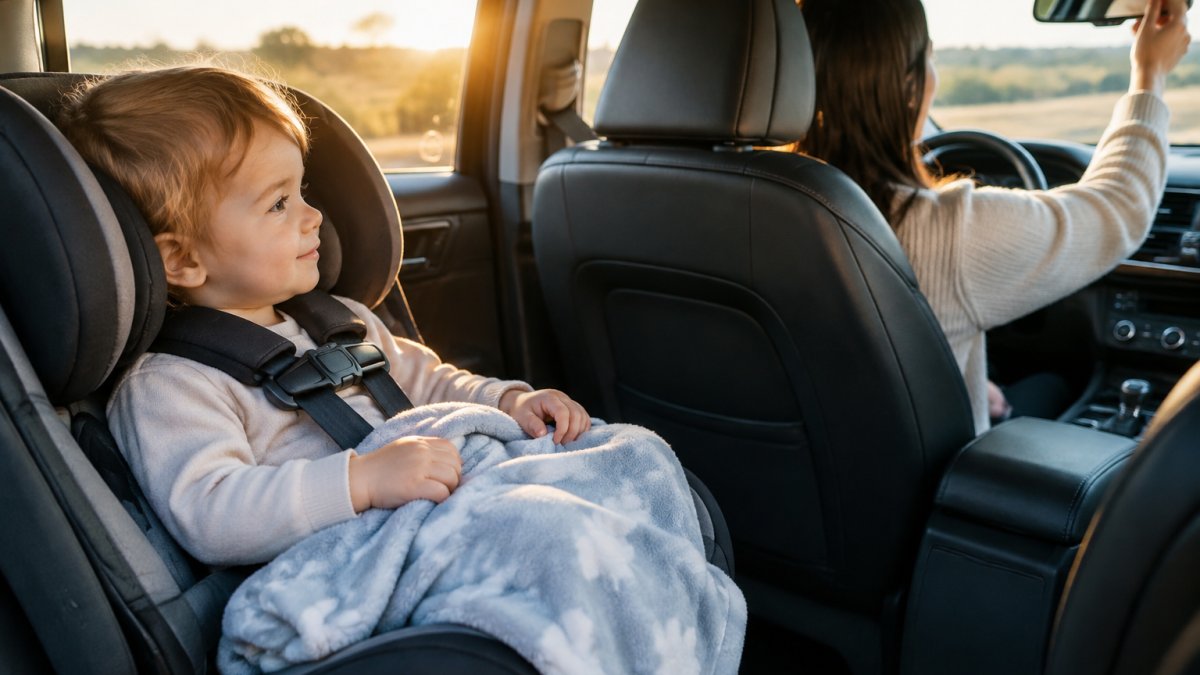
The safer routine: buckle the child in the harness first, tighten the straps against the body, then place the blanket over the top. A blanket should sit on the child, never under the buckle. Thin, flexible fabric works better than a thick quilted one for this reason.
Watch out: a puffy blanket tucked under the harness can feel snug in the driveway and be dangerously loose on the motorway. If you have to loosen the straps to fit the blanket, the blanket is the wrong one.
The Best Toddler Travel Blankets for Road Trips: What to Look For
The best toddler travel blankets for road trips are small, soft, easy to fold, and simple to wash. Size and fabric matter more than brand. A blanket roughly the width of a car seat, in fleece or a cotton-fleece blend, covers the legs without pooling around the buckle.
Here is a short buying checklist:
| Feature | What to Aim For | Why It Matters |
|---|---|---|
| Size | Roughly 60 x 90 cm for toddler legs | Covers without dragging on the floor |
| Fabric | Fleece, cotton, or reversible blend | Warmth without bulk |
| Weight | Light enough to fold one-handed | Easy to store in a door pocket |
| Washability | Machine washable | Spills and motion sickness happen |
| Edges | Bound or stitched, no loose trim | Nothing to pick at or unravel |
Materials: Fleece, Cotton and Reversible Options
Fleece holds warmth with very little weight, which is why it suits car travel. Cotton breathes better on warm days.
Look at the stitching before you buy. Bound edges survive repeated washing far better than raw or loosely stitched ones. If a blanket feels stiff, it will not drape over a lap comfortably.
For families who want a blanket that does double duty, a reversible option earns its place in the bag. You can read more about how we build ours on the BlanketPals blanket collection page.
How to Choose a Travel Blanket for Kids by Age and Climate
Match the blanket to the child's age first, then to the weather and the seat. The goal is coverage without excess fabric near the harness or the floor.
Age-based sizing that actually fits a car seat
A practical test before you buy: fold the blanket in half and lay it across the child's lap while they are buckled in. If the fabric reaches past the knees and bunches at the hips, it is too big for car-seat use. If it barely covers the thighs, it is too small for a winter drive.
Climate and cabin temperature
Fleece suits cool mornings and air-conditioned cabins because it holds warmth with very little weight. Cotton breathes better on warm days and is often enough in summer, when it can also double as shade over a window. A reversible fleece-and-cotton blanket covers both.
Cabin temperature can swing more than parents expect, so a thin blanket plus clothing layers the child can shed is often easier to manage than one heavy blanket. In winter, a fleece blanket should go over the harness rather than under it.
Watch out: a blanket that is warm enough in the driveway can become too warm twenty minutes into a heated cabin. Check the child's neck and back periodically rather than relying on how the blanket feels to your hand.
Picking a Compact Travel Blanket for Airplane and Car Travel
A compact travel blanket for airplane and car travel needs to fold small enough to live in a carry-on or a seat-back pocket. The test is simple: can you fold it into a shape roughly the size of a hardback book?
Three things separate a genuinely packable blanket from one that only claims to be:
- It rolls or folds without a stuff sack
- It weighs little enough to clip to a bag
- It unfolds flat again without creasing
Blankets with a printed play surface pull double duty here. One folds into a bag as a comfort item and unfolds at the destination as something to play on. That is the idea behind our 3D playscape blankets, where the kerchiefs pinch, pull, and drop into place.
How to Keep Toddlers Entertained on Long Car Rides With a Blanket
The trick is to give the blanket a job beyond covering legs. A plain blanket becomes a cape, a tent over the armrest, or a picnic mat at a rest stop. A printed one becomes a small world to drive toy cars across.
A simple rotation that works on a three-hour drive:
- Blanket over the legs for the first quiet stretch
- Blanket spread across the back seat for toy play at the halfway stop
- Blanket folded as a pillow for the final nap window
For more ideas, our guide on how to keep toddlers entertained on long car rides goes deeper, and screen-free car travel activities for kids covers the non-blanket options.
Cleaning and Hygiene After Spills or Motion Sickness
Wash the blanket before the stain sets, and check the care label first.
Our article on washing and caring for BlanketPals blankets covers the specifics for our fabrics.
Packing and Using Your Blanket on the Next Family Road Trip
Pack the blanket where you can reach it without stopping. A door pocket, the seat-back pocket, or the top of the go-bag all work. Fold it flat rather than stuffing it, so it unfolds cleanly when you need it.
A practical routine that covers the whole trip, not just the packing:
- Night before: wash and dry the blanket, fold flat, place in the go-bag.
- Packing: one comfort blanket per child, plus one spare for the car. Keep the spare in a separate bag so a soiled blanket does not contaminate the clean one.
- In the car: blanket on the harness, never under it. Keep the folded spare within arm's reach of the front passenger seat so you can hand it back at a red light rather than pulling over.
- Rest stop: shake out, refold, back in the pocket. This is also the moment to check for crumbs and spills before they set.
- Overnight stop: if the blanket was used for a spill or motion sickness, bag it and use the spare for the rest of the trip. Wash it at the first opportunity rather than letting it sit in the car.
- Home: straight into the wash if it was used for a spill, then back into the go-bag so it is ready for the next trip.
A detail that matters on longer drives: give each child their own blanket and keep it in a consistent spot. Toddlers settle faster when the comfort item is where they expect it, and you avoid the mid-drive search that ends with a blanket under a seat.
Watch out: a blanket left loose on the back seat during a drive can slide into the footwell or block the seat-belt buckle. Fold it and stow it whenever it is not in use, rather than leaving it draped across the seat.
If you are trimming what goes in the boot, our guide on how to pack light for family trips pairs well with this routine.
Frequently Asked Questions
What is the best travel blanket for a toddler on a road trip?
The best pick is a small, soft blanket that packs down easily and can be used without interfering with the car seat harness. Look for toddler-sized dimensions, a washable fabric like fleece or cotton, and a design that keeps your child engaged. BlanketPals blankets are portable and easy to fold, and feature 3D playscape functionality. Always check that the blanket sits over the harness, never underneath it.
Can a toddler use a blanket in a car seat?
Yes, but only on top of the harness. A blanket should never go between your child's back and the car seat or under the straps, because that adds bulk and can stop the harness from fitting correctly. Put the blanket over your toddler after they are buckled in, or use it as a lap cover. For colder cars, warm the vehicle before you leave rather than adding thick layers under the harness.
What size travel blanket is best for a toddler?
BlanketPals offers sizes including Toddler, Throw, and Twin XL, so you can choose the size that suits each child.
Are travel blankets for kids useful on airplanes as well as road trips?
They are. A compact travel blanket for airplane use should fold small enough for a carry-on and be soft enough for cabin naps. The same features that help in the car, like lightweight fabric and easy washing, matter on a flight.
